


We often hear stories of individuals accumulating significant wealth over time — not by making windfall gains or betting big, but by consistently saving small amounts and investing wisely. In an age where instant gratification is the norm, the power of disciplined, incremental savings is often underestimated. Yet, for most Indian households, this simple principle is the cornerstone of long-term financial success.

The Myth of “I Need Big Money to Start”
A common misconception among investors is that wealth creation requires large sums of money. In reality, the most important ingredient is consistency, not size. Even modest amounts — say ₹2,000 a month — can snowball into a sizeable corpus over time thanks to the magic of compounding.
Let’s consider an example: Investing just ₹2,000 per month for 25 years in a mutual fund that delivers an average annual return of 12% can build a corpus of over ₹38 lakh. Increase that to ₹5,000 per month, and the corpus grows to nearly ₹94 lakh. The same investment of ₹ 5,000 per month if increased by 10% per year the corpus would grow to ₹2.11 crores. The earlier you start, the more time your money has to grow.

Small Steps, Big Results
The key lies in transforming your small, often unutilized amounts — money that might otherwise be spent on impulse purchases, frequent takeout, or subscriptions — into productive savings. Here’s how to get started:

1. Automate Your Savings: Set up a Systematic Investment Plan (SIP) that deducts a fixed amount every month from your bank account. This ensures discipline and reduces the temptation to spend.
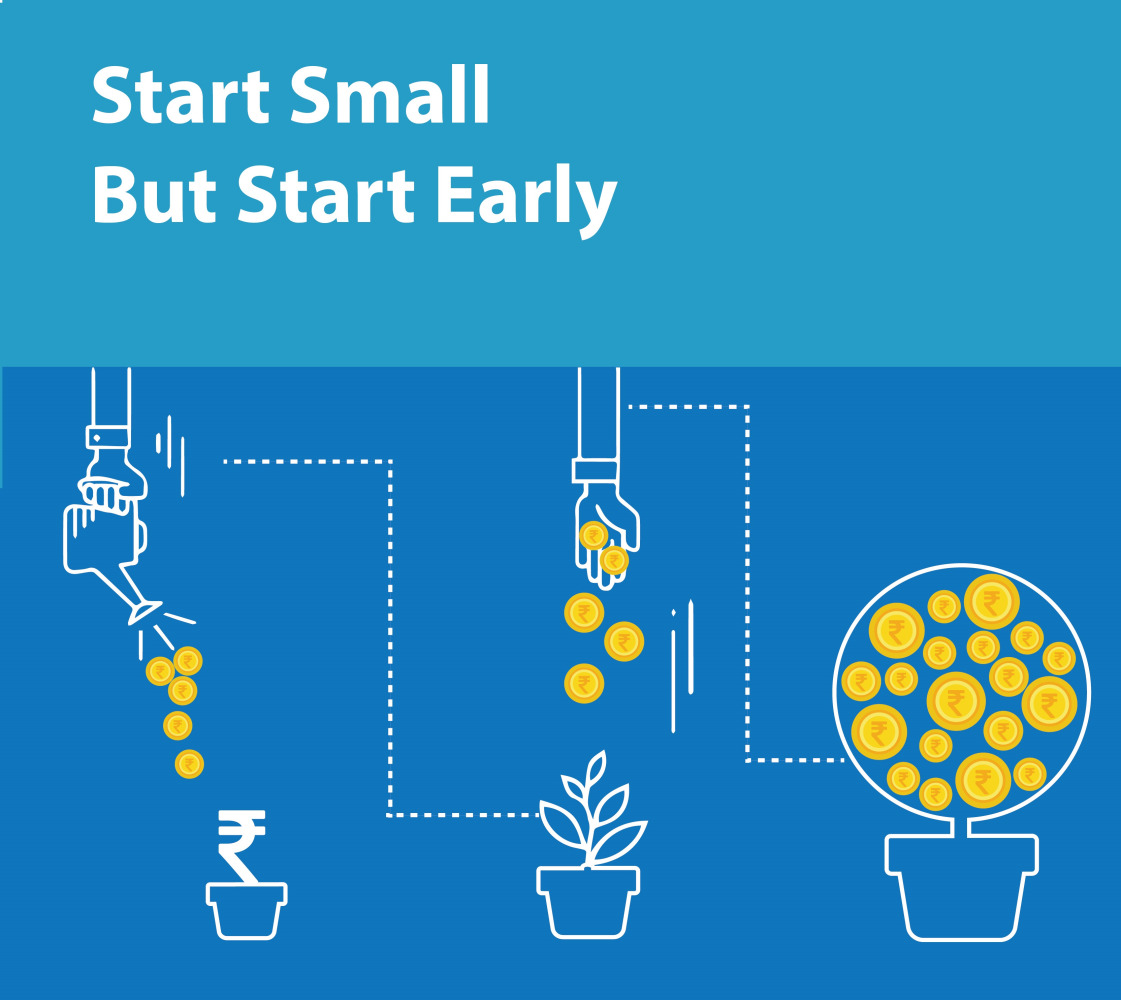
2. Start Early, Even If It’s Small: Don’t wait until you have a bigger salary or surplus income. The earlier you start, the more powerful compounding becomes.

3. Increase Contributions Gradually: As your income grows, increase your savings proportionately. A 10–15% annual increase in SIP amount can dramatically accelerate your corpus growth.

4. Use Goal-Based Buckets: Assign specific purposes to your small savings — be it a vacation, child’s education, retirement, or emergency fund. It brings motivation and structure to your plan.
Real-Life Lessons from Indian Households
Across India, millions of families have relied on this time-tested approach. Whether it’s the homemaker who saved her grocery budget surplus in a recurring deposit or the salaried professional who started a ₹1,000 SIP in their 20s — small, regular efforts have built impressive financial outcomes over time. As on April 2025, Indians are investing 26,600 crores of SIP per month, testimony to the fact of our traditional saving habits.

In fact, many investors who started their SIPs a decade ago with small sums are today enjoying the benefits of a substantial wealth cushion — built patiently, not hastily.

Final Thoughts: Start Small, Stay Consistent
The journey from “pocket change to prosperity” is not about timing the market or chasing high returns. It’s about building a habit. As a wealth management firm, we’ve seen time and again that investors who stick to a simple, consistent saving routine outperform those who wait for the ‘perfect’ time or the ‘ideal’ income.
So don’t underestimate your small savings. Channel them right, and they can pave the way to big financial freedom.