

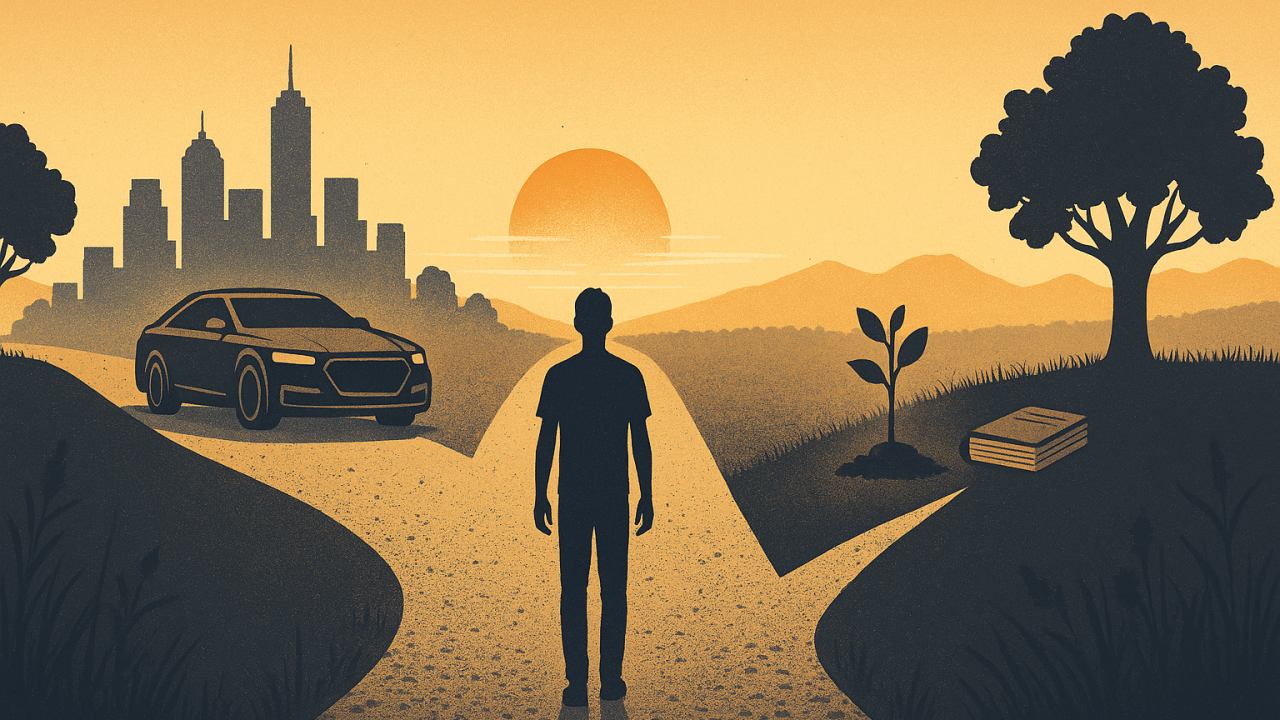
Radha was just thirteen when she looked out of the car window one morning and asked her father, Suresh, a question that caught him off guard. “Papa, why don’t we buy a bigger car like my friend Priya’s parents? Does that mean we are poor?” Sitting beside him, Sunita, his wife, gave him a knowing glance. The question seemed innocent, but Suresh realized it held a deeper meaning—how do we really define whether we are rich or poor?

That evening at dinner, the conversation continued. Suresh asked Radha what made her think they were poor. She replied, “Because my friends say their parents have bigger cars, bigger houses, and they go on fancy vacations.” Sunita smiled gently and said, “Beta, society always has its way of telling you how much is enough. But if we keep comparing, we’ll never feel satisfied.” Suresh added, “Let me share a secret—being rich or poor is more about how you feel inside than about what others think.”
Suresh decided to post this small incident on Twitter, and to his surprise, it went viral. Some strangers began asking the price of his car to guess his net worth. Others mocked him, branding him as poor. That only deepened his reflection. Am I rich or poor? Who decides this—me, my family, or society?
He explained to Radha that if they lived in a modest neighborhood, their lifestyle might appear rich. But in an upscale area, the same lifestyle could make them feel poor. “Too many people,” he said, quoting Will Rogers, “spend money they haven’t earned, to buy things they don’t want, to impress people they don’t like.” Radha laughed at the line but began to understand the weight of it.

To make the lesson clearer, Suresh shared their own financial journey. When he and Sunita started their life together, they had little savings and no home of their own. But they set two simple goals: to fund Radha’s higher education and to build a retirement corpus. Over time, they bought a modest independent house and cleared the loan in just a few years. They bought their car without taking any loan. They built their lives debt-free, never allowing rising incomes to inflate their lifestyle unnecessarily.
“See Radha,” Sunita explained, “we always kept 90% of our spending for needs and only 10% for wants. That’s why today, even if we don’t earn another rupee, we can live comfortably with what we have.”
Radha was amazed. “So we’re rich?” she asked. Suresh smiled, “Yes, in our own terms. We may not have the biggest car or house, but we have no EMIs, we have health, peace of mind, and we sleep soundly at night. Isn’t that real wealth?”

The conversation ended with a reflection. Being rich is not about what society sees, but about the balance of peace, health, and financial freedom one feels within. As Radha went to bed that night, she no longer compared their car to her friends’. Instead, she whispered to herself, “Maybe true richness is not in what we show the world, but in how safe and happy we feel at home.”