


Over the past two decades, the Indian stock market has evolved from being heavily dependent on foreign capital to one where domestic investors play an equally decisive role. At the centre of this evolution are two powerful participants: Foreign Institutional Investors (FIIs) and Domestic Institutional Investors (DIIs). Understanding how their behaviour changes across market phases offers valuable insight into market movements and investor sentiment.
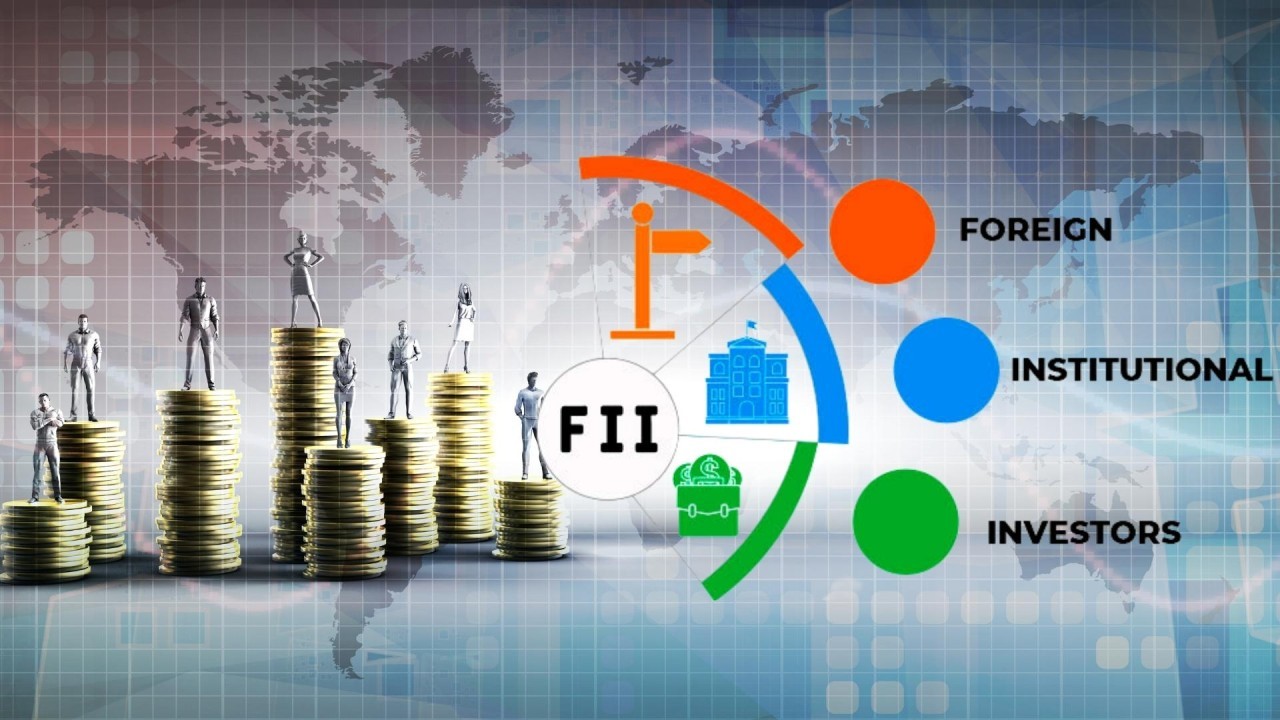
In the early years of India’s market liberalisation, FIIs were the dominant force. Their capital flows often dictated market direction. Periods of heavy FII inflows typically coincided with strong rallies, while sudden withdrawals led to sharp corrections. Global factors such as US interest rates, currency movements, geopolitical events, and risk appetite influenced these flows more than domestic fundamentals. As a result, Indian markets often reacted sharply to events occurring far beyond its borders.
During bull markets, FIIs usually act as momentum participants. Strong economic growth, corporate earnings expansion, and favourable global liquidity conditions attract foreign money into Indian equities. Large-cap stocks, particularly in banking, IT, and energy, tend to benefit the most, as FIIs prefer liquidity and scale. Their buying not only pushes prices higher but also improves valuations, sometimes stretching them beyond near-term fundamentals.
However, the behaviour of FIIs turns defensive during global risk-off phases. Financial crises, rising global interest rates, or geopolitical tensions often trigger capital outflows, irrespective of India’s domestic strength. The 2008 global financial crisis and subsequent global tightening cycles are examples where FII selling led to steep market corrections. In such phases, markets often fall faster than domestic news would otherwise justify.

This is where the growing role of DIIs becomes critical. Over the last decade, domestic institutions—mutual funds, insurance companies, pension funds, and provident funds—have emerged as a stabilising force. The rise of systematic investment plans and long-term household participation has ensured steady domestic inflows, even during periods of foreign selling. This structural change has reduced the market’s vulnerability to abrupt FII exits.
In volatile or corrective phases, DIIs often act counter-cyclically. While FIIs sell to manage global risk or rebalance portfolios, DIIs tend to buy, supported by continuous inflows from retail investors and long-term savings pools. This behaviour was clearly visible during recent market corrections, where domestic buying helped absorb foreign selling and limit downside volatility. As a result, market recoveries have become faster and more resilient.
Looking ahead, both FIIs and DIIs will continue to shape Indian markets, but their roles are increasingly complementary rather than dominant. FIIs bring global capital, valuation discipline, and international visibility. DIIs provide stability, long-term orientation, and alignment with domestic growth. For investors, this shift underscores an important lesson: while short-term market movements may be influenced by flows, long-term wealth creation depends on fundamentals, discipline, and staying invested across cycles.