

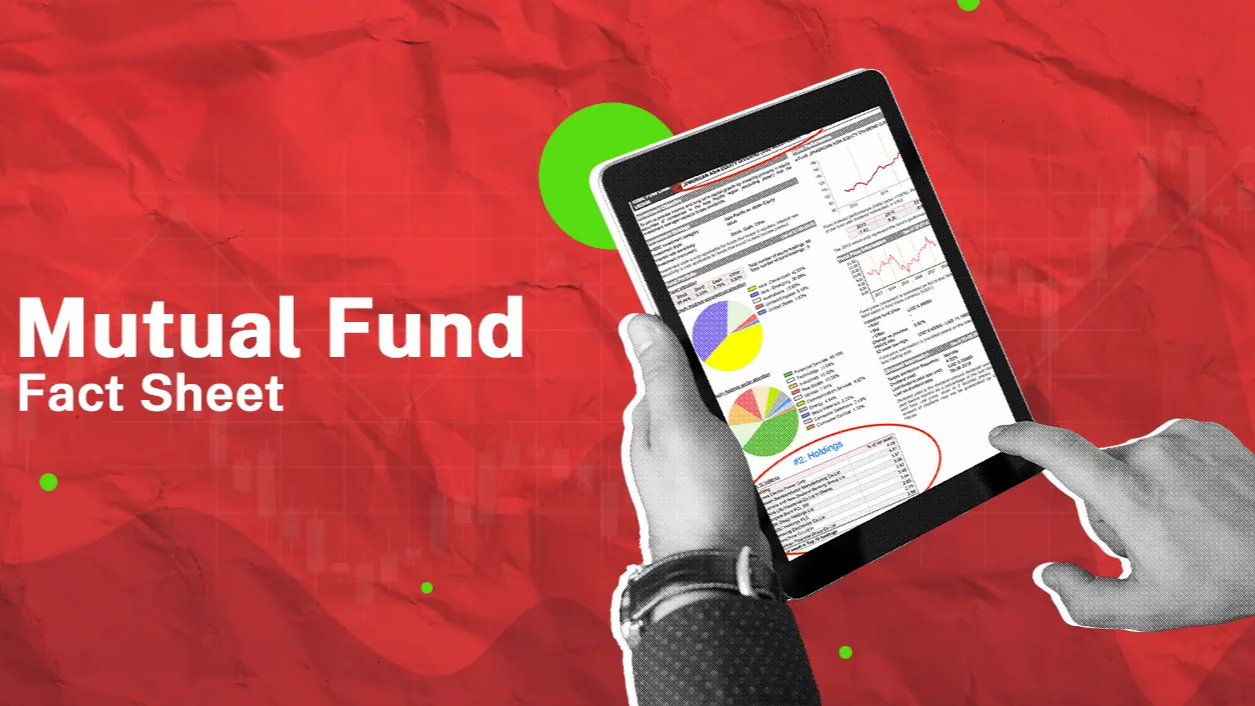
Mutual funds are among the most transparent investment products available to retail investors in India. Every month, fund houses publish a document called a fact sheet, which provides key details about each of their schemes. While it runs into several pages with numbers, charts, and jargon, a discerning investor should know what to look for.
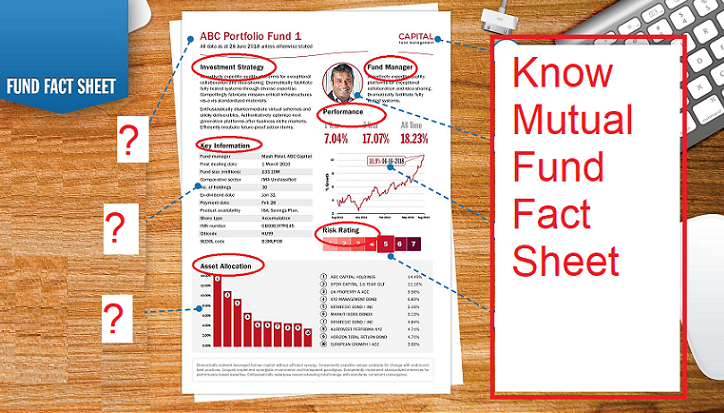
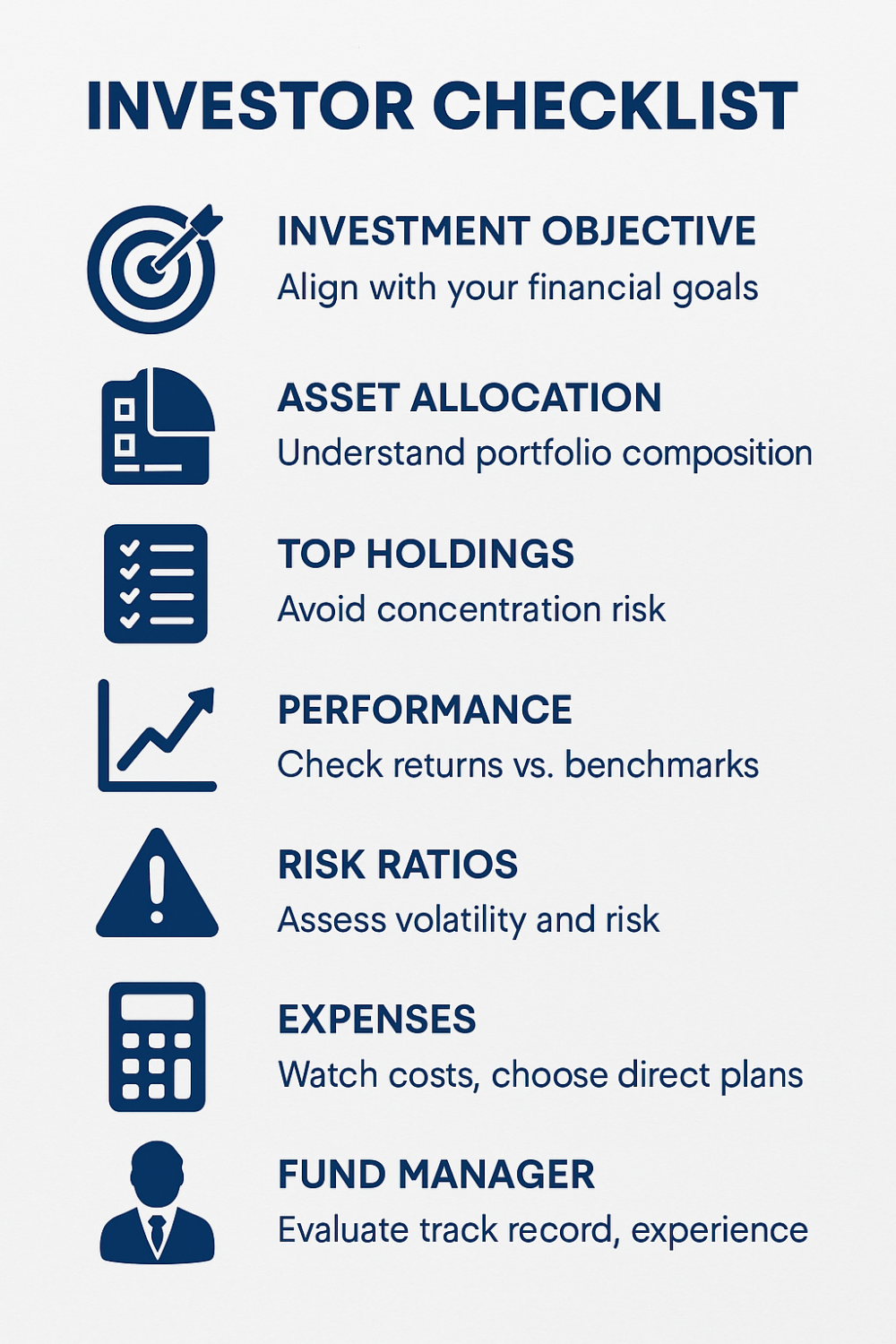
1. Investment Objective and Category At the very outset, check what the scheme aims to achieve. Is it an equity growth fund, a hybrid balanced fund, or a debt income fund? The objective tells you the mandate—whether the fund seeks long-term capital appreciation, steady income, or a mix of both. This should align with your personal financial goal.
2. Asset Allocation and Portfolio Mix The fact sheet provides a breakdown of how the fund is invested across asset classes—large-cap, mid-cap, small-cap, bonds, cash equivalents, or international exposure. For an equity fund, check the percentage allocated to different market capitalisations and sectors. This tells you how diversified the portfolio is and whether the risk level matches your comfort. Eg: If most of your portfolio is tilted heavily towards small-caps, may be riskier.
3. Top Holdings and Sector Exposure Every fact sheet lists the top 10 holdings and the sector allocation. If the scheme is heavily concentrated in a few companies or sectors, it carries higher concentration risk. For example, if a fund has 40% of its assets in banking stocks, its performance will swing significantly with the financial sector. A well-diversified portfolio ensures that your investment is not overexposed to a single theme.
4. Performance Against Benchmark Past performance does not guarantee future returns, but it does give context. Always see how the fund has performed over 1, 3, 5, and 10 years relative to its benchmark index. If a large-cap equity fund consistently underperforms the Nifty 100 over multiple periods, it raises questions about the fund manager’s strategy. On the other hand, outperformance with lower volatility indicates strong management.
5. Risk Ratios Good fact sheets disclose risk measures like standard deviation, beta, Sharpe ratio, and alpha. Standard deviation shows volatility, beta shows correlation with the benchmark, Sharpe indicates return for the risk taken, and alpha shows the excess return generated. Investors often chase high returns but overlook whether those returns came with excessive risk.
6. Expense Ratio The cost of investing matters. A high expense ratio eats into long-term returns, especially in debt funds where returns are moderate. Direct plans usually have lower expense ratios than regular plans. Investors should prefer cost-efficient options without compromising quality.
7. Fund Manager Track Record Finally, look at who is managing the fund and their track record. A fact sheet provides the name and tenure of the manager. Continuity and experience in navigating different market cycles are reassuring factors.
Reading a fact sheet with the right lens can make the difference between a confident, informed investment and a blind leap of faith. Mutual funds are long-term vehicles, and an informed investor makes better choices by looking beyond glossy advertisements and relying on the data a fact sheet transparently provides.