


“Artificial Intelligence can analyse data in seconds. But can it understand your life’s dreams, fears, and responsibilities?”
This question came up during one of our investor education sessions, Paise Ki Paathshala.
A young professional, Karan, raised his hand and asked, “Rajendra sir, AI can answer almost every financial question today. It recommends mutual funds, analyses stocks, prepares retirement plans, and even predicts market trends. Do we really need a human financial advisor anymore?”
I smiled.
“Karan, let me ask you a few questions.”
“Go ahead.”
“If tomorrow your father suffers a heart attack and requires ₹30 lakh for treatment, will AI know whether you should redeem your mutual funds, take a loan, or use your emergency corpus?”

Karan paused.
“No.”
“If your daughter gets admission into a university in the US while your son wants to start a business in India, can AI decide whose goal should be funded first?”
“I don’t think so.”
“And if you inherit ancestral property that your family emotionally wants to retain, but financially it makes sense to sell it, who will help balance emotions with economics?”
Karan smiled.
“That sounds much more complicated.”
“It is,” I replied.
“AI is extraordinarily intelligent. But intelligence and wisdom are two very different things.”
Today’s AI can process enormous volumes of information. It can compare thousands of mutual funds within seconds, calculate retirement needs, explain tax provisions, identify suitable asset allocations, and even detect portfolio risks. It is undoubtedly transforming financial services by making quality information more accessible than ever before.
But managing money is rarely just a mathematical exercise.
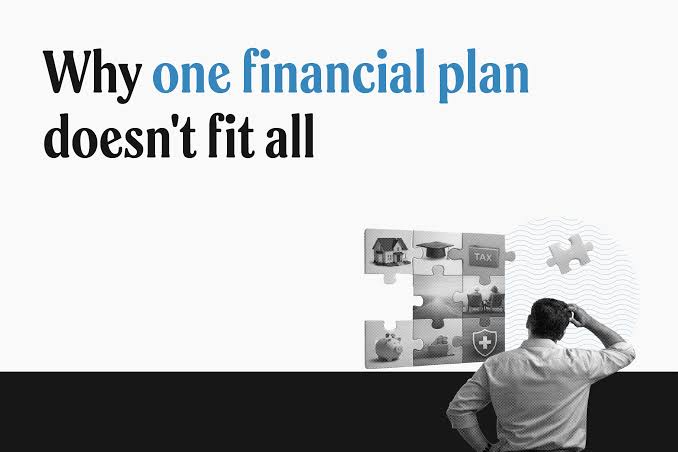
Financial planning is deeply personal.
It involves understanding family dynamics, health conditions, career uncertainties, business risks, relationships, behavioural biases, and life aspirations.
Suppose markets fall by 30%.
AI may recommend staying invested because historical data suggests markets recover over time.
But what if you have lost your job simultaneously?
What if your spouse has decided to take a career break?
What if your parents suddenly require expensive long-term medical care?
The advice now depends not on market data, but on your life situation.
A machine cannot sit across the table and notice the anxiety in your voice. It cannot sense hesitation between spouses while discussing retirement. It cannot understand that your reluctance to invest in equities comes from watching your father lose money decades ago.
Financial advice is not merely about choosing products.
It is about understanding people & situations.
The best financial advisors often spend more time asking questions than giving answers.
What kind of life do you want?
What worries you most?
How much risk can your family emotionally tolerate?
What legacy do you wish to leave behind?
These conversations cannot be reduced to algorithms.
Does this mean AI has no role?
Quite the opposite.
AI is perhaps the greatest assistant a financial advisor can have. It can analyse portfolios, identify tax-saving opportunities, automate reviews, detect inconsistencies, and provide faster insights. It improves efficiency and enhances decision-making.
But it should remain an assistant—not the decision-maker.
Karan looked thoughtful.
“So, AI can tell me what is possible. But someone still needs to help me decide what is right.”
“Exactly,” I replied.
“In the Mahabharata, Arjuna wasn’t short of weapons or information. What he needed was Lord Krishna’s wisdom to guide him through uncertainty.”
Humans provide experience based perspective, which AI cannot.