

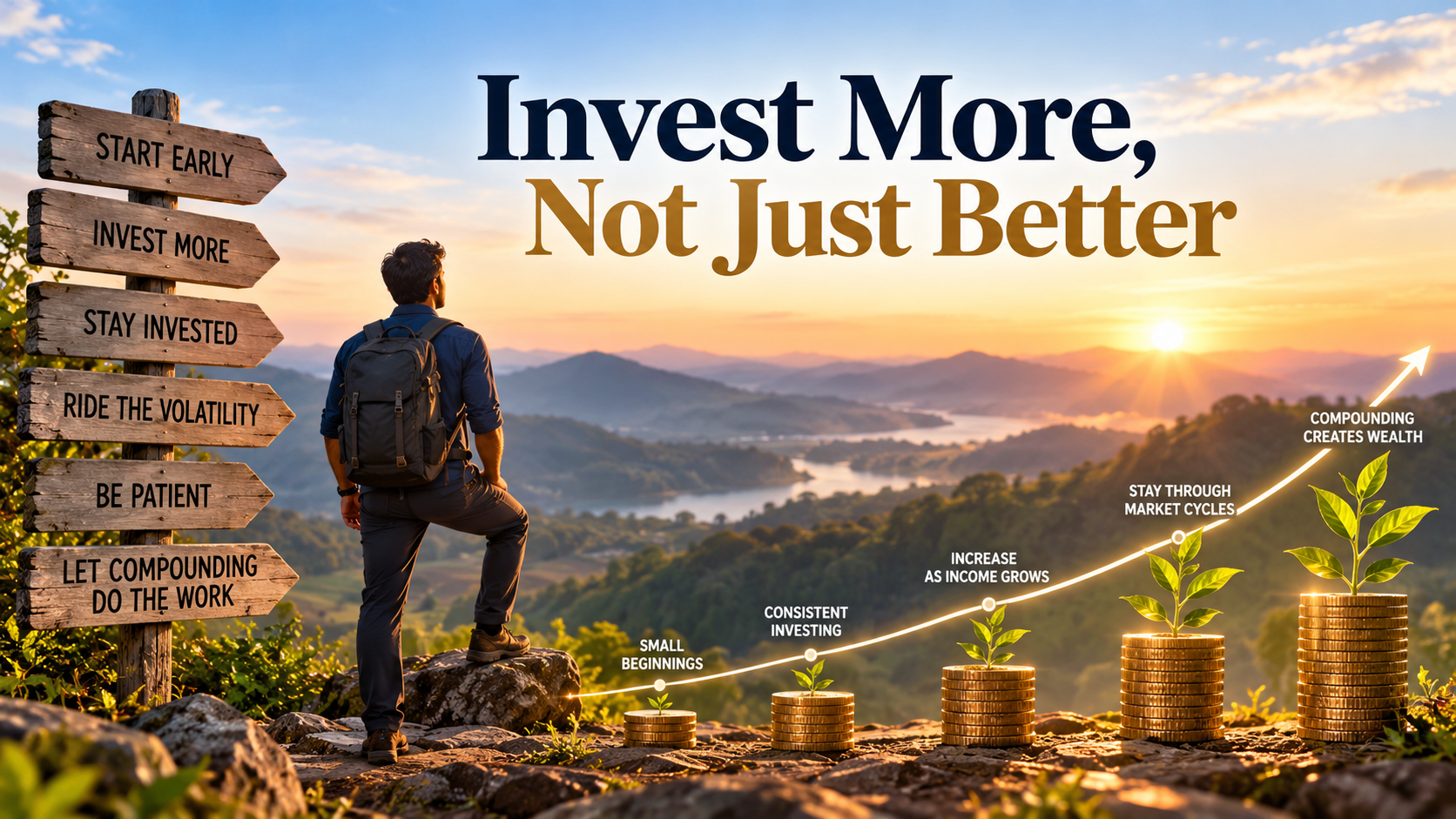
“Varun, which mutual fund should I invest in to get the highest return?”
This is perhaps the most common question investors ask. But after years of helping families build wealth, I believe there is a more important question: “How much more can I invest, and for how long?”
Investors often spend enormous energy searching for the best fund, the perfect entry point or the right time to exit. Yet, the investors who build substantial wealth over decades are rarely those who perfectly timed every market movement. They are usually the ones who invested consistently, increased their investments as their income grew, stayed invested through difficult periods and allowed compounding to work.

Consider the remarkable journey of Berkshire Hathaway owned by legendary investor Warren Buffett.
Over roughly six decades, Berkshire experienced extraordinary rises, painful falls and long periods when its performance disappointed investors. In 1999, for example, Berkshire’s shares fell 19.9% while the S&P 500 gained 21%. In 2008, Berkshire fell 31.8%, the S&P 500 also declined sharply. In 2015, Berkshire fell 12.5% while the index gained 1.4%. There were also years when Berkshire delivered only modest returns while the broader market performed much better.
Yet look at what happened over the entire journey.
From 1965 through 2025, Berkshire Hathaway’s per-share market value compounded at 19.7% annually, compared with 10.5% for the S&P 500 including dividends.
The lesson isn’t that every investor should own Berkshire Hathaway. The lesson is what time and compounding can do when you remain invested in a quality asset through different market cycles.
Imagine an investor who kept asking, “Is this the best time to invest?” Every market correction would have created doubt. Every period of underperformance would have encouraged a switch. Every bull market would have created the temptation to chase something else.
Instead, consider an investor who followed a simpler mantra: invest more.
Salary increases? Increase the SIP.
Business profits rise? Invest some of the additional surplus.
A financial goal moves further away? Increase the investment rather than simply looking for a higher-return product.
This approach has another powerful advantage. Increasing the amount invested can have a far greater impact on eventual wealth than endlessly searching for an extra percentage point of return.
The objective of investing is not to win every year. Even Berkshire did not. The objective is to participate in the long-term growth of productive assets and allow compounding enough time to do its work.
Of course, this does not mean ignoring investment quality, diversification, asset allocation or risk. Choosing appropriate investments remains important. But once a sensible portfolio is established, constantly jumping between funds in pursuit of the latest winner can do more harm than good.
So perhaps the question we should ask ourselves is not, “Which investment will give me the highest return?”
Instead, ask: “How can I invest more, stay invested longer and give compounding more money and more time to work?”
Over the last 25-30 years Indian mutual funds too have shown remarkable growth inspite of all the volatility; because wealth creation is often less about finding the perfect investment and much more about making imperfect markets irrelevant by giving your investments enough time to compound.