


The biggest obstacle to wealth creation is not always a falling market as we are witnessing since last two years or a poorly performing investment. Sometimes, it is the investor’s own behaviour.
Many investors buy a stock because it is rising, sell it when it falls, and switch to another investment that has recently delivered better returns. Mutual fund investors often follow a similar pattern, moving from one top-performing scheme to another in the hope of staying ahead of the market. Unfortunately, this constant activity can quietly damage long-term wealth.
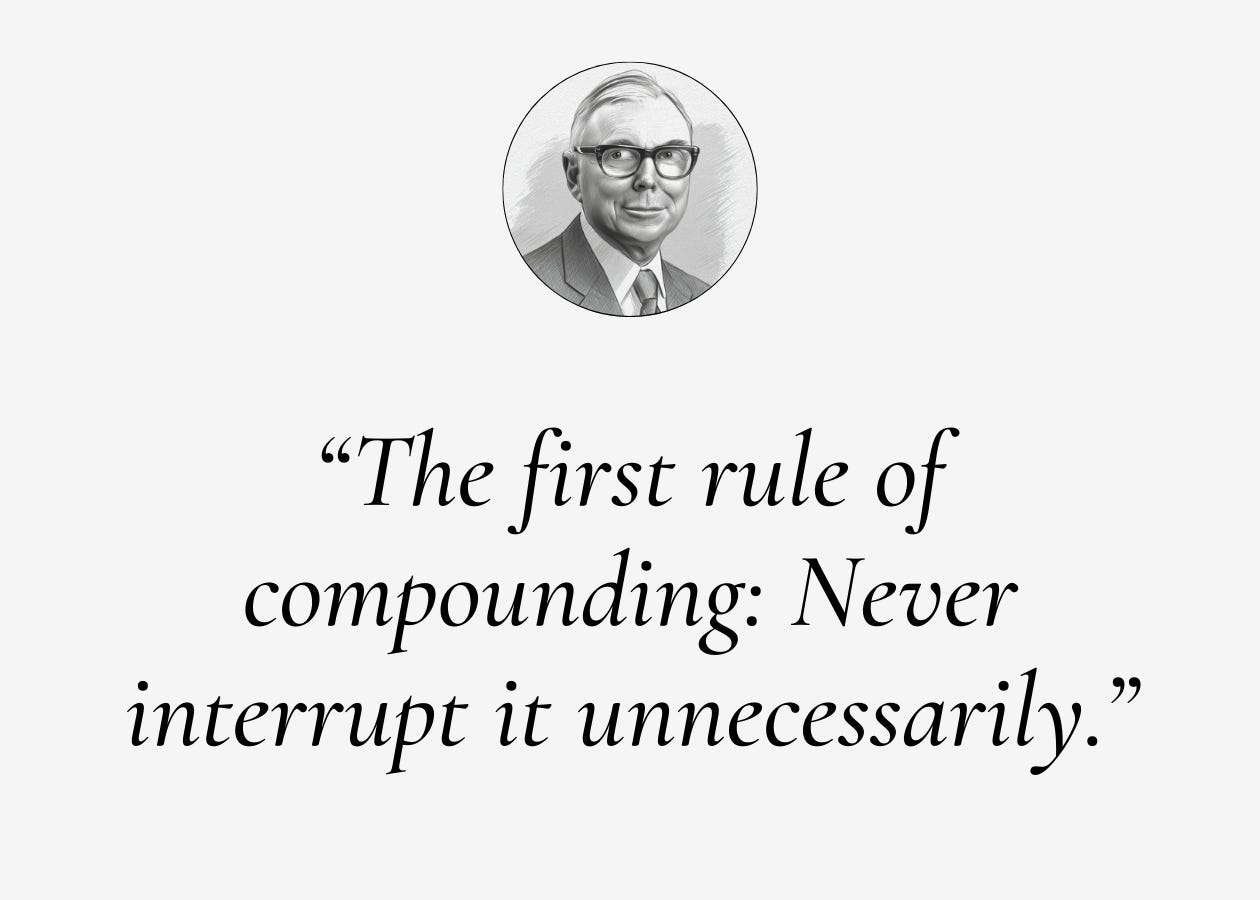
Charlie Munger’s timeless advice captures the essence of compounding: “Do not interrupt compounding unnecessarily.”
Every investment goes through cycles. Stocks experience periods of optimism, disappointment and recovery. Mutual funds, too, move through phases when their investment styles, sectors or market-cap categories are in favour or out of favour. A fund that performs exceptionally well in one period may lag in the next, while a relatively quiet performer may eventually find its opportunity.
This is particularly relevant to mutual funds, where the list of top performers changes frequently. The best-performing schemes over one three-year or five-year period are rarely identical to those leading the next. Chasing yesterday’s winners can therefore result in buying after a strong run and selling after a disappointing phase, effectively doing the opposite of what long-term investing requires.
Frequent churning carries several hidden costs. Brokerage, transaction charges, bid-ask spreads and other applicable expenses can gradually eat into returns, especially for active stock traders. In mutual funds, switching or redeeming investments may trigger exit loads, where applicable, and capital gains tax. Tax paid today reduces the amount that remains invested and available to compound in the future.
Consider an investor who sells a profitable investment simply to move into another fund that has recently outperformed. The capital gains tax may become payable immediately, reducing the capital by STCG/LTCG paid as per current tax laws, even though the replacement investment offers no guarantee of better future returns. Had the investor stayed invested, the tax liability might have been deferred until a later sale.
Beyond these measurable costs lies a more significant problem: behaviour. Frequent buying and selling often reflects impatience, fear, greed or the discomfort of watching another investment perform better. Investors begin comparing portfolios every few weeks instead of measuring progress against their financial goals.
This does not mean investors should never sell. A change in financial goals, deteriorating business fundamentals, a change in a fund’s mandate, persistent concerns about the investment process or a portfolio that no longer matches the investor’s risk profile may justify action. The key is to distinguish a genuine reason to exit from temporary underperformance.
A sensible investment review should examine the reason for underperformance, the investment’s role in the portfolio, its underlying fundamentals and the investor’s time horizon. One bad market cycle, by itself, is rarely sufficient reason to abandon a sound long-term strategy.
The objective is not to own the best-performing investment every year. It is to build a suitable portfolio, give it time to work and avoid costly decisions that interrupt compounding without good reason.