


“Mansi, I have investments in Indian shares and mutual funds. Since my parents are resident Indians, can I simply gift these investments to them and reduce my tax?” Abhishek asked.
Muskan looked interested. “That sounds like a smart way to save tax. Is it actually allowed?”
Mansi from Arthashastra smiled. “Gifting shares or mutual fund units to your parents is permitted, but it is important to understand what the gift achieves and what it doesn’t.”
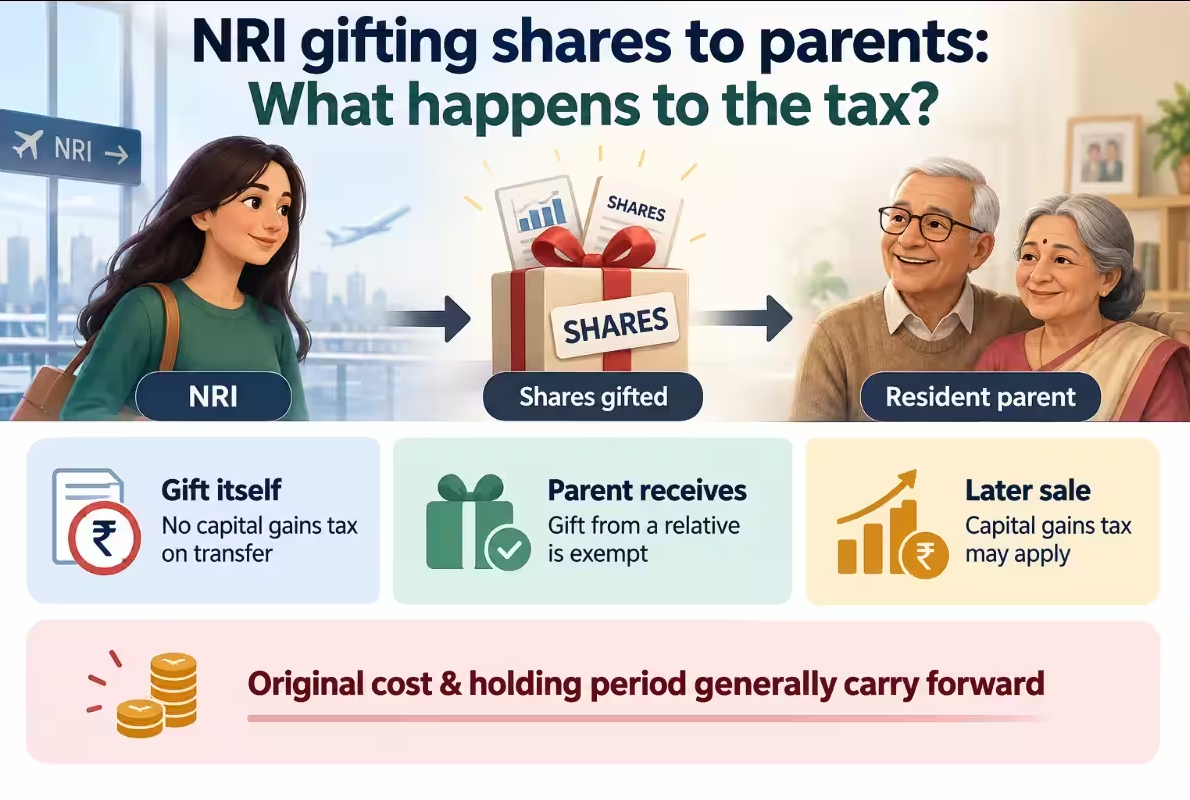
A genuine gift from a child to parents is generally not taxable in the parents’ hands merely because they receive the shares or mutual fund units. Parents fall within the specified definition of relatives under the income-tax provisions relating to gifts.
“Suppose I gift ₹20 lakh worth of shares to my father and he later sells them,” Abhishek asked. “Who pays the capital gains tax?”
“The important point,” Mansi explained, “is that the gift itself does not reset the cost of acquisition. For computing capital gains when your father eventually sells the shares, the relevant tax rules generally require the previous owner’s cost to be considered & also the period of holding for determining whether the gain is short-term or long-term.”
Muskan interrupted. “Then where can the tax benefit come from?”
“Potentially from the parent’s overall tax position,” Mansi said. “If your parents have lower taxable income, the eventual tax liability on the investment income or capital gains may differ from what would have applied if the investment remained with you. But this needs to be evaluated based on the parent’s complete income, applicable tax regime, type of security and the nature of the gain.”
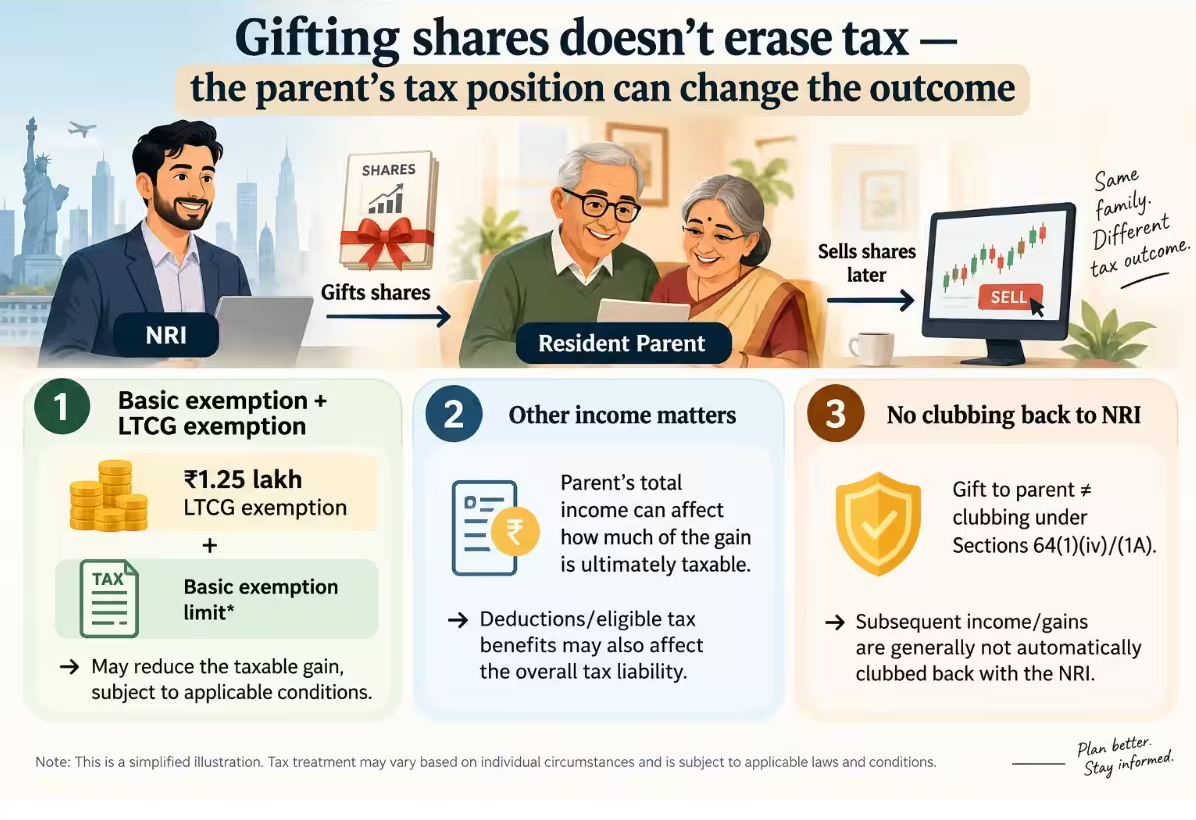
“There is another practical benefit for NRIs,” Mansi added. “When an NRI sells Indian investments, tax deduction and compliance requirements applicable to payments to non-residents can make transactions more cumbersome. Section 195 deals with TDS on certain payments to non-residents that are chargeable to tax. If the investment is genuinely transferred to a resident parent before a future sale, the subsequent transaction is undertaken by the resident parent, potentially avoiding the NRI-specific TDS process.”
“But isn’t that simply transferring the tax responsibility?” Muskan asked.
“Exactly. It is not a magic tax-free route. The parent becomes the owner and must comply with the applicable tax rules when the investment is sold. Documentation of the gift and transfer is therefore extremely important.”
Mansi suggested that families maintain a proper gift deed or other appropriate documentation, investment statements, acquisition cost records and proof of the transfer. They should also review nominations and estate-planning arrangements.
Abhishek nodded. “So the objective should not be ‘How do I avoid tax?’ but rather ‘Can transferring this asset to my parents make sense from a tax, cash-flow, succession and family-planning perspective?’”
“Precisely,” Mansi replied. “For an NRI family, gifting investments to resident parents can sometimes offer administrative and tax-planning advantages, including reducing the hassles associated with NRI TDS on a later sale. But the transaction must be genuine, documented and evaluated before execution.”
A gift can be simple. The tax consequences are not. Before transferring shares or mutual fund units, understand both sides of the transaction.