


Retirement is not the end of financial planning—it is the stage where financial planning matters the most. The right investment strategy should help senior citizens achieve three objectives: regular income, tax efficiency, and long-term growth. With increasing life expectancy and rising healthcare costs, relying on just one source of income is no longer enough.

One of the biggest tax benefits available today is that individuals under the new tax regime can have annual income of up to ₹12 lakh without paying income tax (subject to the applicable rebate under Section 87A and prevailing tax rules). For senior citizens who primarily depend on interest and dividend income, this opens up several attractive investment opportunities.
Fixed Deposits (FDs) offered by banks remain a popular choice because they provide predictable returns and capital safety. Similarly, Public Provident Fund (PPF), Senior Citizens Savings Scheme (SCSS), Post Office Monthly Income Scheme (POMIS), and RBI Floating Rate Savings Bonds continue to be excellent options for generating stable cash flows. These instruments are particularly suitable for retirees who prioritize capital preservation and regular income over aggressive growth.
However, retirement planning should not stop at fixed-income investments alone.
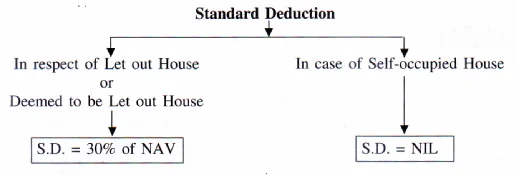
Many retired individuals also own residential property. Rental income can become another dependable source of cash flow. Under the Income-tax Act, income from house property is eligible for a 30% standard deduction under Section 24(a) towards repairs and maintenance, irrespective of the actual expenditure incurred. This significantly reduces the taxable rental income. With proper tax planning and by combining this deduction with the current tax structure and rebate provisions where applicable, many senior citizens can efficiently manage rental income upto 18 lacs taxfree assuming there is no other income from fixed deposits/dividends, etc.
While regular income is essential, retirees must also protect themselves against another silent risk—inflation.

A retirement that may last 25 to 30 years requires part of the portfolio to continue growing. Medical expenses, household costs, travel, and lifestyle expenses are unlikely to remain constant. Therefore, senior citizens should consider allocating a portion of their long-term savings to diversified equity mutual funds.
Equity investments may fluctuate in the short term, but over longer periods they have historically helped investors outpace inflation and preserve purchasing power. The allocation need not be aggressive. Even a measured exposure, suited to one’s risk profile and income needs, can help ensure that retirement savings continue to support future expenses.
The key is diversification. Instead of relying entirely on bank deposits or entirely on equity, retirees should build a portfolio that combines:
• Stable income through FDs, SCSS, Post Office schemes, and RBI Bonds.
• Rental income from real estate where appropriate.
• Diversified equity mutual funds for long-term wealth creation and inflation protection.
Retirement investing is no longer about choosing the safest investment; it is about choosing the right mix of investments.
A thoughtfully diversified portfolio can generate regular income, reduce tax outgo, preserve capital, and continue growing over time. After spending decades building wealth, senior citizens deserve an investment strategy that works just as hard to protect it.